Saturday, March 12, 2011

Almond Shortbread Cookies - Low Carb/Gluten Free


One of the great things about being on a low carb diet is being able to eat foods high in fat while still maintaing your blood sugar, weight and healthy cholesterol levels.  Since I don't eat meat, I get my fats from two main sources; nuts and oils, which are plant based, and whole fat dairy products.  I use butter, heavy cream and full fat cheese in my everyday meals, but I try not to go overboard. Too much of a good thing, and all that. I'm not convinced that it's healthy to eat unlimited amounts of fat but I suspect that how much you can consume without ill effects varies from person to person. If you're prone to high cholesterol  or if you stop losing weight before you reach your goal, you may need to limit the amount  of fat you consume.

Nevertheless, I feel it's important to include low carb/high fat treats into your everyday diet.  I believe it is possible to find a balance between complete austerity and overindulgence, but cravings can get in the way.  I'm only 4 days into my gluten free diet, but the first thing I noticed was a significant decrease in appetite.  When I first stopped taking Metformin, my appetite increased alarmingly and I stopped losing weight because I could not seem to control myself. I experienced wicked cravings for anything sweet, even desserts sweetened with low carb natural sweeteners, and for things like pecans and roasted almonds. Portion control flew out the window and I found myself binge eating. There was nothing wrong with the quality of the food - the quantity was the problem. Now that my appetite seems to be under control (and I sincerely hope it will stay that way) I can incorporate low carb desserts without worrying about eating the whole batch of whatever treats I make in one sitting. So far, my cholesterol levels have been within the normal range, but I do use flaxseed oil everyday and that may have something to do with those results.

There are loads of low carb dessert and snack recipes and a lot of prepared products, many of them available online. Many of them contain artificial ingredients and because they need to be shipped, end up being very expensive. I prefer being able to make my own treats; I like being able to control what goes into them and it ends up being cheaper even if you use high quality ingredients. If you don't like to bake or if you're new to baking, some of the recipes can be a challenge. But I think made from scratch is better, both in taste and in quality.

It's worth mentioning here that if you are brave enough to start cooking and baking, you will have to accept the fact that you will make mistakes. You will burn things, drop them on the floor, not cook them thoroughly. You may even set your kitchen on fire (although I would not recommend this) and it's probably a good idea to have a fire extinguisher on hand.  You'll make a mess and you will feel, at times,   like giving up. But it will get easier - especially if you accept that failure is part of the process. Don't let it get you down - it happens to everyone.

If you are going to enjoy low carb treats, it's important to eat them slowly and savor every bite instead of cramming them into your mouth like there's no tomorrow.  Portion control is half the battle - we tend to eat too much, which can cause digestive distress, in addition to adding too many calories, carbs and fats. This is why I have broken down the amount of each dessert recipe  - the less you have in the house, the easier it will be to avoid cravings. This recipe for almond shortbread is the best cookie recipe I've found thus far.


Almond Shortbread Cookies (Low Carb/Gluten Free)


These are wonderful - not too sweet, lightly crisp and have a rich lemon, buttery taste. They are highly addictive, so if you tend towards a lack of control when it comes to your appetite, you might want to leave these under lock and key. Seriously.


Ingredients:


1 C finely ground blanched almond meal/flour
1/4 C erythritol, powdered (you can use a "Magic Bullet" if you have one or you can get a cheap coffe grinder and use it for just for this purpose)
1/4 tsp pure stevia extract
1/4 C (half a stick) unsalted butter, softened
1/4 tsp sea salt
1/4 tsp pure vanilla extract
1/4 tsp pure lemon extract

If you're not crazy about lemon, just add a 1/2 tsp of vanilla instead. You can also use almond extract if you prefer.


I use Wholesome Sweeteners Organic Zero.  You can make sugar alcohols like erythritol out of corn or soy (which may or may not be genetically modified). Organic Zero is made from organic sugar and the company, Wholesome Organic, is fair trade certified. The company website:http://www.wholesomesweeteners.com/ can tell you more about that.


Preparation:


* Heat oven to 300 F. Line a baking sheet with unbleached parchment paper. Mix dry ingredient together in a medium sized bowl and set aside.

*Using an electric mixer, beat softened butter for about one minute (I use the Braun handheld mixer with the whisk attachment).  Add the vanilla and lemon extracts and beat until blended. Add dry ingredients a little at a time and mix together to form into dough-like consistency ( you may want to do this with a wooden spoon, whatever works best for you).


*Divide dough into 12 equal portions and roll each into balls. Arrange evenly on prepared baking sheet. Bake for 5 minutes and remove from oven.


Using a fork (you may want to run it under water - the dough will be sticky),  press down on the cookies lightly.


Return to oven and bake for  another 18 minutes. Remove from oven and allow to cool completely on the baking sheet.


Makes 12 cookies and each has 96.2 cal, 1.04 effective carbs, 8.2 g fat, 1 g fiber and 2 g protein.

Thursday, March 10, 2011

Cleaning The Cupboards - Going Gluten Free

 Before I started this blog, I had been toying with the idea of going gluten free.  My reasons for the gluten free trial are based on what I've learned about the benefits of removing gluten from one's diet. According to Wikipedia , gluten is a protein found in wheat (including kamut and spelt), barley, rye, malts, triticale (a hybrid of wheat and rye) and oats.  Gluten is often used as a food additive to flavor, stabilize or as a thickening agent (dextrin).  Gluten sensitivity can cause symptoms such as weight gain, digestive troubles and fatigue. It can also affect blood chemistry and the treatment of autoimmune disorders. Loads of people swear by it and if it might make my Fibromyalgia easier to live with, I'm more than willing to give it a go. I've been warned by medical professionals that you need to very strict about the complete elimination of gluten from your diet and that it can take from six months to a year to feel the full effects. There's a good article about fibromyalgia and it's connection to gluten sensitivity written by The Gluten Doctors:


"Anecdotally we have witnessed over and over again the resolution of the classic muscle aches and tender points in regard to gluten elimination".


To facilitate my next big step forward, a gluten free diet, I ruthlessly cleaned any and all gluten offenders out of my kitchen. Since I'm already doing low carb, it's not a huge stretch but it will mean giving up and/or replacing certain items.  Here's a list of what got axed:

*regular soy sauce (which I will replace with gluten free soy sauce)
*oat flour (which I already replaced with gluten free oat flour)
*low carb bake mix (which I can replace with a recipe for homemade low carb gluten free bake mix, which I'll be using in future recipes, I'm sure)
*low carb pancake mix
*miso soup
*low carb tortillas
*low carb pita bread
*two kinds of oats, rolled and steel cut

Most of the  un-replaceable items are also processed foods, which I'm trying to cut out completely. Which brings me to the world of whole foods. Wikipedia defines whole foods as: "those that are unprocessed and unrefined, or  processed and refined as little as possible before being consumed" ( I love Wikipedia, don't you?).  It should be very clear to everyone at this point in history that additives, especially chemical additives, are not good for a human being's general health and well being.  It doesn't stop companies that produce food products they claim to be  "health food", in all it's various guises and most people just don't read food labels carefully enough.  I know there are a lot of Low Carb products on the market and most of them are available online. When I started reading the labels I was shocked at how much crap they contained. I can't pronounce half the ingredients and all those chemicals can't be good for you. Since my main goal is to try and be as healthy as possible, I think I have to leave behind prepared foods and get used to making everything from scratch. I don't mind - it's worth the extra work to know exactly what's in my meals.

The other benefit of whole foods is monetary - most unprocessed food tends to be cheaper than processed foods in the end. I realize that organic food tends to cost more and I think that everyone has to decide for themselves how much you can afford to spend on food. So my motto in regards to this is : don't spend more than you can afford. In an ideal world, all the best would be affordable, but it doesn't work that way. For example, if you can't afford organic produce or dairy products that come from animals that are free range, growth hormone free, and are fed based upon their natural diets, don't beat yourself up too much. Same thing for processed foods - sometimes it can't be avoided. Only you can decide what's best for you and your unique situation. So shop, prepare meals and eat as well as you are able. Don't judge yourself too harshly - I'm certainly not going to judge you. It's hard enough to make even the smallest changes in our lifestyles,  so anything you do, no matter how small, it's a gigantic step in the right direction. Be proud of yourself for even thinking about making these adjustments.


Wednesday, March 9, 2011

The Things I Had To Give Up..And How I Learned To Live Without Them/Part 1

Low Carb Soy Mocha

So, this is an update of an original post. A post that I've elected to include with the update, even though it no longer applies to my life. I think it's important to show that learning something new can lead to making big changes in your lifestyle and that the beliefs that we hold dear can be challenged at any time. When faced with that challenge, we have a choice; we can avoid the issue (but not the consequences that come with not changing) or we can take it to heart and make whatever adjustments we can. It's hard to give up the things we love, the things we count on everyday to make life more pleasurable. Sometimes there are decent substitutions, but if there aren't, then we have to learn to live without. Improving your health usually requires making sacrifices, but the benefit of making those sacrifices means feeling better. I think it's a fair trade. It's up to you to decide how far you're willing to go and how long it takes you to get there.

The most recent thing I've chosen to give up is soy. I've been gluten free for three weeks and in that relatively short period of time, I've noticed significant changes in my appetite (lower) and energy levels (higher). As far as the bathroom scale is concerned, my six month rut of losing and gaining the same ten pounds is over:  I've gone from 185 to 172 LBs.  I don't miss the low carb tortillas and pita bread that used to be a regular part of my diet, I don't crave more calories than my body needs and I just plain feel better. It even seems to have reduced the symptoms of acid reflux. So, it worked and it wasn't that difficult. But soy is a different story.

In my last post, I talked about my reasons for soy elimination. What I didn't talk about was the void I have yet to fill - my "daily decaf soy mocha" void. It's like having to give up my daily over-priced coffee  habit all over again except, this time, I don't have a satisfactory substitution.  It turns out that almond milk does not behave like soy milk when added to espresso  - it doesn't taste very good and it lacks the creamy consistency. I also used unsweetened soy milk in decaf  chai (I usually have two cups a day) and although  I can easily substitute heavy cream in this case, without losing the desired flavor,  giving up the soy milk in my coffee and tea means I lose a total of 6 grams of fiber and 14 grams of protein per day.

So, my current, mid-morning coffee break consists of what I call a "faux mocha":

1/4 C decaf espresso
1/4 T unsweetened cocoa powder
1 C unsweetened vanilla almond milk
1 T heavy cream
stevia


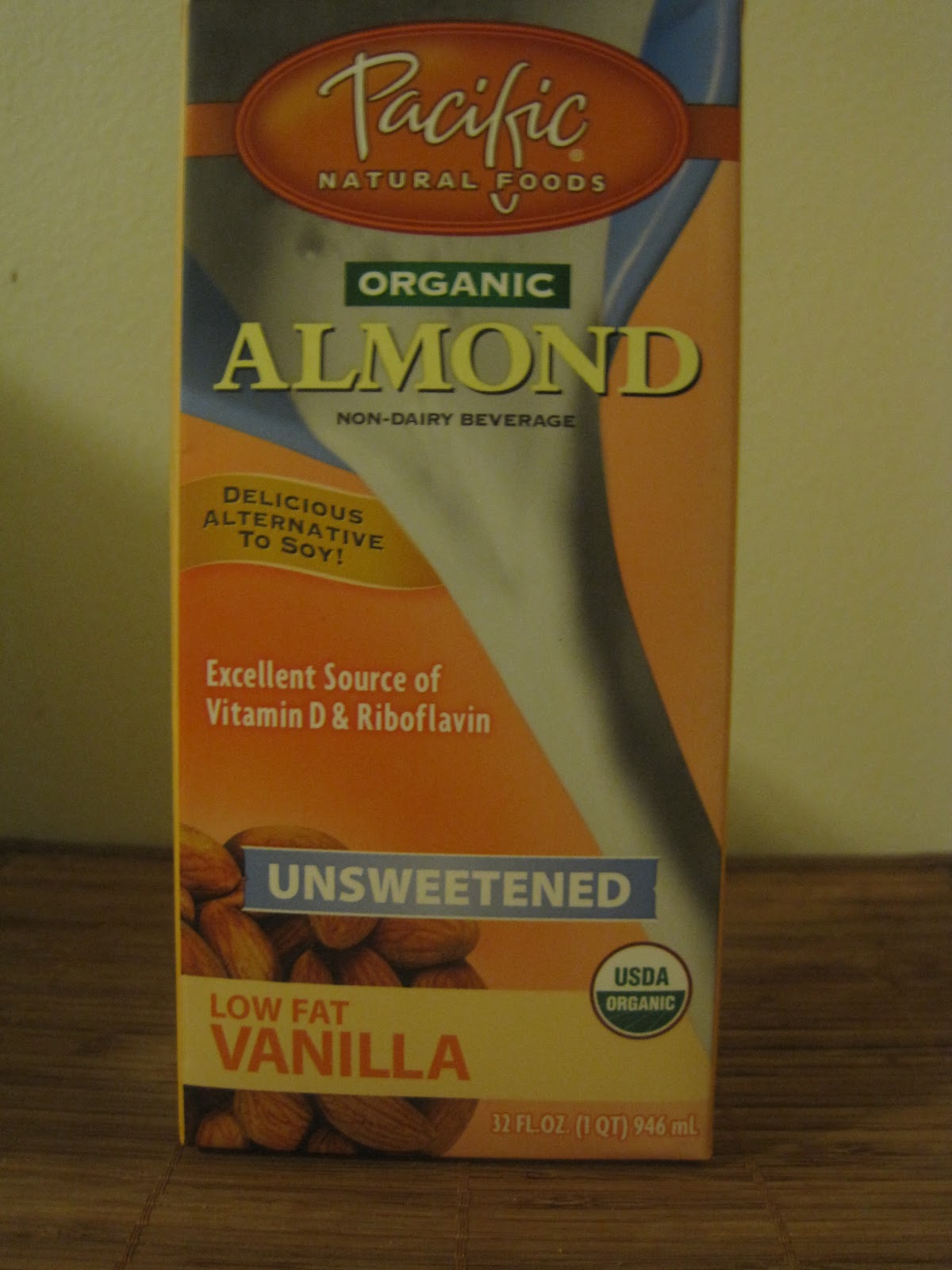
I use Pacific Organic Almond Milk.

It has 98 cal, 2.5 net carbs, 8.75 g fat, .5 g fiber and 1.25 g protein.


 It's OK, but it's just not as satisfying.  I miss my soy mocha and I have no idea if eliminating soy from my diet will be as rewarding an experience as eliminating gluten. I'm guessing it won't be and I'm feeling cranky as a result. There's an old saying: "Nothing tastes as good as being thin."
. I've always hated this old saw and not only because it exemplifies an attitude about austerity that I find ridiculous. It may be easy for some people to find comfort and pleasure from abstaining, but I think most people like to eat. Food is more than a nutritional requirement - it's a way to experience the world through our taste buds, which can be as pleasurable as we are able and willing to make it.

I don't expect evryone to give up soy, meat or gluten or anything else, for that matter. I don't expect anyone to agree with my beliefs -these are merely the choices I have made in an attempt to feel better. But I hope that you will be open-minded and willing to make changes - it certainly makes living without the things we love and have come to rely upon a much easier proposition.


3/30/11


I think the toughest addiction I ever had to give up was Caffeine Free Diet Coke. I hate to think about what years of drinking what is essentially a neurotoxin, did to my nervous system. I know I'm not the only one out there. But before I tackled that one, I first had to give up one of my favorite addictions: designer coffee. I'm not part of what I like to call "The Starbuck's Phenomenon;" it's not because I'm an aging hipster wannabe. I just associate Starbucks with corporation, which automatically sends me warning signals. I haven't read anything truly terrible about Starbucks and I know that they are ranked pretty high in terms of green business practices. But I happen to live near an real live coffee house, Cafe Trieste, which is just blocks away from my apartment. It's much better than any chain coffe place and that's where I used to get my Soy Mochas (and their excellent chocolate croissants, which I also had to give up). I had already given up caffeine  when I was first diagnosed with Type II Diabetes and it wasn't that hard. I tend to be anxious and I have epic insomnia, so caffeine is really not my friend.

I had to figure out the low carb homemade version. Fortunately, I grew up in Miami, with a heavy Latino population and I learned the ins and outs of espresso making. Never mind the fancy machines; I know they look cool, but they are a pain in the ass to clean. It's also much easier to make the stove top version.


That's a three serving pot. You can also get them in one and six servings. The three serving pot makes about 1/2 cup of espresso and I use a 1/4 cup to make my mocha.  It's simple - the whole thing unscrews into three pieces, the top, the bottom and the filter. Fill the bottom with water until it's just below the indicated point. Put in the filter and fill with coffee grounds (don't pack it) and screw on the top and boil over a medium high heat. You do need to keep an eye on it, because it can start to burn very quickly (usually when deeply involved with some other meaningless task). Also double check to make sure it's filled with water - the rubber washer will melt and burn and it's added drama you don't need.

In case you didn't already know, what makes it espresso is how it's made and not the type of coffee that's used. So you can use any naturally decaffeinated  coffee - just make sure it's ground finely enough for espresso.


Low Carb Soy Mocha


Ingredients:

1/4 C freshly brewed decaf espresso
1 C unsweetened vanilla soy milk
1/4 tsp unsweetened cocoa powder
natural sweetener, to taste

Preparation:

*Pour hot coffee into a mug, add the cocoa powder and stir until well blended. Pour in soy milk and microwave on high for approximately 45 seconds. Add sweetener and sprinkle with ground cinnamon, if desired.


Has 103 calories, 1.5 net carbs, 4.9 g fat, 4 g fiber and 9 g protein.

And there's your happy ending.  You can make it a double and still have only 3 net carbs. You can put it in one of those adorable ceramic/porcelain, eco-friendly re-useable cups fashioned to look like cardboard coffee to-go cups with plastic tops. It's cheaper, you won't be tempted to buy a muffin or a scone and you won't have to stand on line for coffee, ever again.
Easy virtue - there's nothing like it.


Just for fun, go to the Starbucks website and check out:

http://www.starbucks.com/menu/catalog/nutrition?.drink=all#view_control=nutrition.

You can look up your favorite Starbucks beverage and get the skinny on it's nutritional information. My favorite, the 8 oz Soy Mocha has 130 cal, 22 net carbs, 3 g fat, <1 g fiber and 4 g protein.